
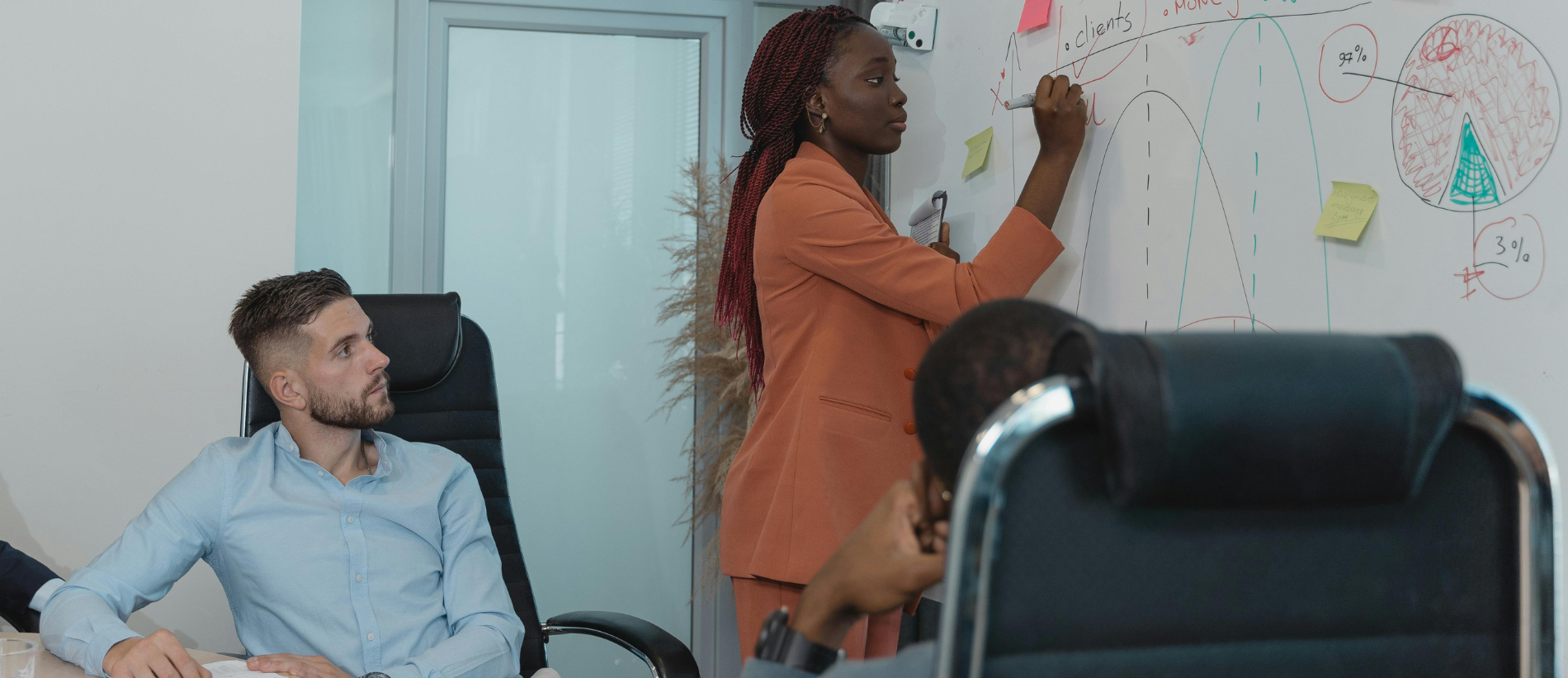
The Gap Between the Boardroom and Monday Morning
Organisations rarely fail at strategy. More often, they fail at integration.
In the boardroom, strategy is typically well-constructed. The thinking is rigorous, the ambition is clear, and the leadership team reaches alignment on the direction forward. There is a sense of momentum in the room—an assurance that the organisation is now positioned for its next phase of growth or transformation.
However, the real test of strategy does not happen in the boardroom. It begins on Monday morning.
As leaders and teams return to the operational environment, a different reality emerges. Immediate pressures resurface, legacy ways of working take hold, and decision-making begins to default to familiar patterns. Over time, the distance between strategic intent and day-to-day behaviour quietly expands. The strategy does not collapse abruptly; it gradually loses traction.
What was once clear at the top becomes diluted in execution.
A common misstep in organisations is to equate alignment at the leadership level with alignment across the system. While executive agreement is essential, it is not sufficient. Agreement does not automatically translate into clarity for middle management, consistency in decision-making, or meaningful shifts in behaviour across teams. It is within these layers that strategy is either reinforced or quietly eroded.
In practice, strategy rarely fails due to a lack of planning. Most organisations invest significant time and effort into developing robust strategies, supported by detailed roadmaps, milestones, and performance metrics. The structural elements are often in place. Yet the expected outcomes remain elusive.
This is because strategy does not ultimately fail at the structural level—it fails at the human level.
Leaders, often under pressure, revert to established habits that feel efficient and low-risk. Teams prioritise what is urgent over what is strategically important. Decision-making continues to be shaped by historical assumptions rather than the future the strategy is intended to create. In this environment, the organisation continues to operate as it always has, even as it aspires to something different.
The underlying system remains intact.
A perspective that has consistently resonated in my work with leadership teams comes from a Managing Director I once worked with in the banking sector, who described strategy execution as “an AND game, not an OR game.” This distinction is subtle but critical. Organisations do not succeed by focusing on systems or people—they succeed by attending to both, simultaneously and deliberately.
In reality, however, the balance is often uneven. Organisations tend to invest heavily in designing the strategy, refining structures, and building implementation plans. Comparatively less attention is given to shifting leadership behaviour, challenging entrenched thinking patterns, and building the internal capacity required to lead differently. It is within this imbalance that many strategies begin to lose momentum.
Execution, therefore, cannot be treated as an operational handover. It is a leadership discipline.
Leaders play a central role in translating strategy into lived reality. This is reflected not only in what is communicated, but in what is prioritised, questioned, tolerated, and ultimately rewarded. Over time, these signals shape how the organisation interprets what truly matters. Regardless of how well-articulated a strategy may be, the organisation will take its cues from leadership behaviour.
In effect, people follow what leaders do, not what strategy documents say.
To fully understand why strategy succeeds or fails, it is necessary to look beneath the surface. Every organisation operates within a system of patterns, decision-making norms, incentives, and underlying beliefs about how work gets done. These elements form the environment within which strategy must be executed. If the system remains unchanged, it will continue to produce the same outcomes, regardless of any new strategic direction.
This is where many transformation efforts stall. New strategies are introduced, but the organisational environment required to sustain them is not sufficiently reshaped.
From a Selah perspective, this is where the integration of consulting and coaching becomes essential. Consulting plays a critical role in designing the system—clarifying strategy, structures, and processes. Coaching, on the other hand, strengthens the leader’s capacity to think, decide, and operate differently within that system. Sustainable transformation requires both dimensions to work in tandem.
No strategy, regardless of its quality, exists independently of the people responsible for executing it. Their thinking patterns, habits, and capacity to adapt will ultimately determine whether the strategy is realised or remains theoretical.
Strategy, then, does not fail in moments of high-level decision-making. It fails quietly over time, in the gap between intention and behaviour.
For leaders, the more useful question is not whether the strategy is clear. It is whether the organisation—and critically, its leadership—has meaningfully shifted in how it operates to support that strategy.
That is the work of integration.
And it is often the work that determines whether strategy succeeds.
Selah.


